


-
68% OFF
-
48% OFF
-
47% OFF
-
30% OFF
-
73% OFF
-
-
33% OFF
-


























How do I measure my furniture?
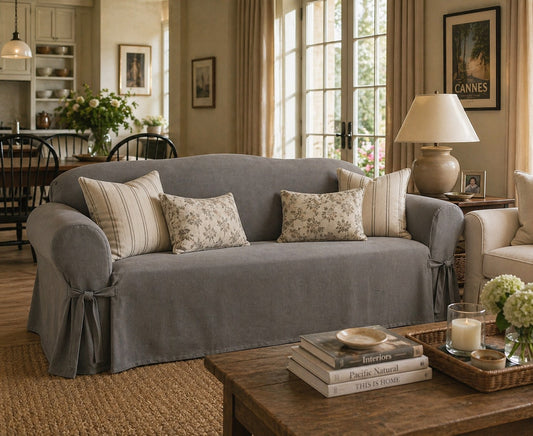
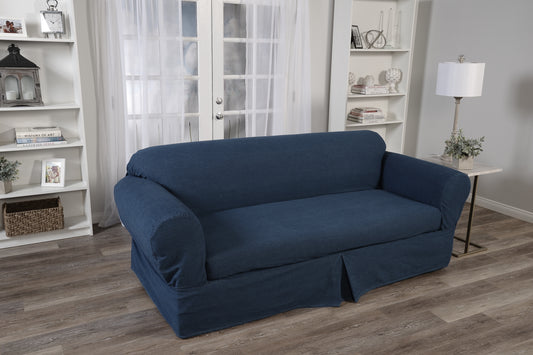
To measure for a slipcover, measure the width (outside arm to other outside arm), depth (front to back), and height (floor to top of the back).
What material do you use for your slipcover?
We have a large variety of 100% cotton fabric and some polyester and spandex fabric.
How long does delivery take?
We process our orders in one to two business days; however, we also give a large priority to orders with expedited shipping.
Do you offer warranties on your slipcovers?
We have a warranty of 30 days from shipping date.
How should I care for my slipcovers?
Since majority of our slipcovers are made of 100% cotton, we recommend machine wash and dry clean low, but all our slipcovers have a care instruction label to follow.
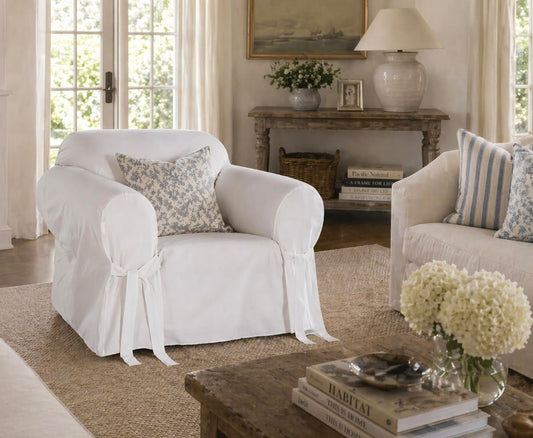
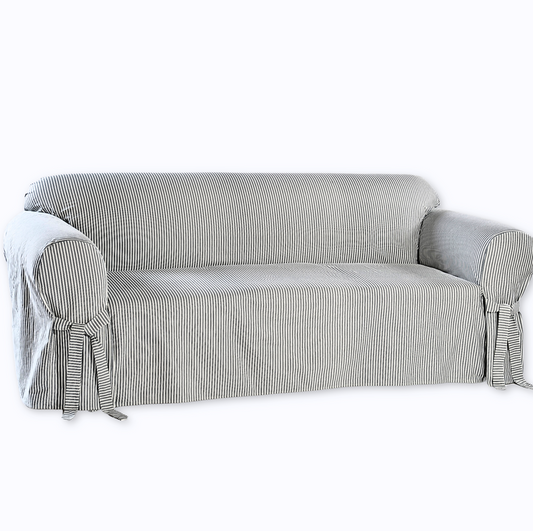
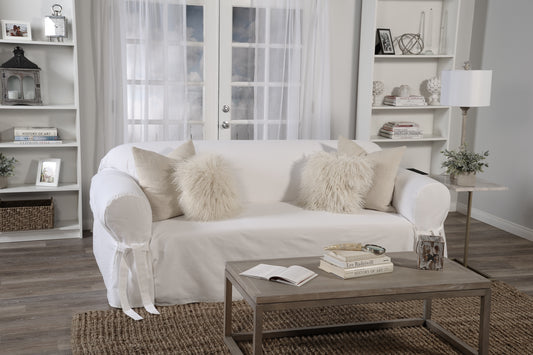
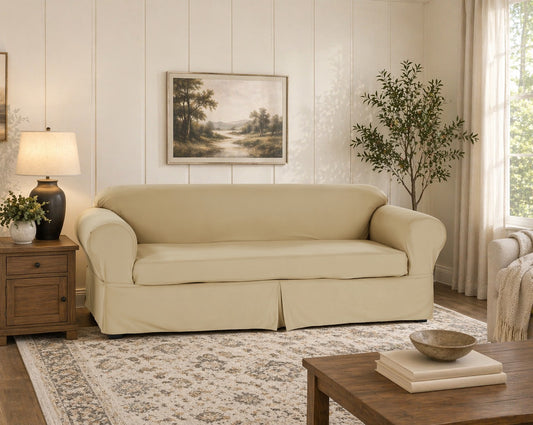
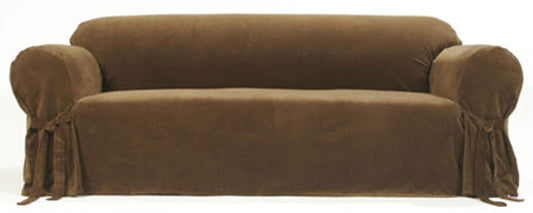
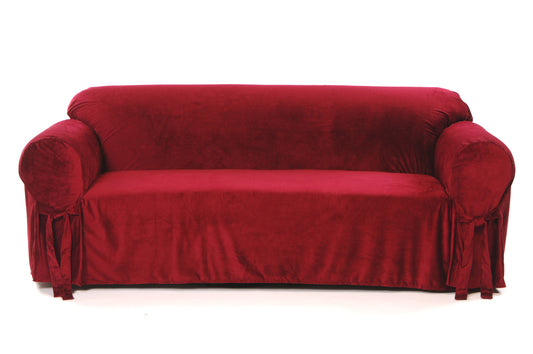
Leather sofas are a significant investment, and for good reason. They look sharp, hold up well over time, and have a timeless quality that works in almost any room. But leather is not bulletproof. Scratches, cracking, fading, and general wear are all real concerns, especially in homes with kids or pets. If you want to protect your leather sofa without replacing it or committing to an expensive reupholstering job, slipcovers for leather sofas are the most practical and cost-effective solution on the market. At The Slipcover Company, we carry covers built to stay secure on smooth leather surfaces, so you get protection and a genuine style refresh without the daily hassle of readjusting a cover that will not sit still.
The Real Challenge With Covering Leather
Covering a fabric sofa is simple enough. The texture of the upholstery creates natural friction that keeps a slipcover in place through regular use. Leather is an entirely different surface to work with. Its smooth, non-porous finish gives a slipcover almost nothing to grip, which means a cover that performs perfectly on a fabric sofa can bunch, slide, and shift constantly on leather.
This is the core problem that most generic slipcovers fail to solve. They are not designed with leather in mind, and the result is a cover that looks messy within hours of being put on. The answer is not to avoid slipcovers altogether. It is to be intentional about choosing one built for the job, whether that means a non-slip couch cover with rubberized grip backing, a stretch fit design that wraps tightly around the sofa frame, or a combination of both.
Getting this right from the start saves a lot of frustration and means you can actually enjoy the look you were going for rather than constantly fussing with a cover that refuses to cooperate. It also means the cover does its job of protecting the leather underneath, which is the whole point.
What to Look for in a Leather Sofa Slipcover
Not all slipcovers are built the same, and when you are shopping for leather specifically, certain features matter a lot more than they would for other sofa types.
Grip backing
A rubberized or textured backing on the underside of the slipcover creates friction between the cover and the leather surface. This single feature makes more difference than almost anything else when it comes to keeping the cover in place on a smooth sofa.
Stretch fit construction
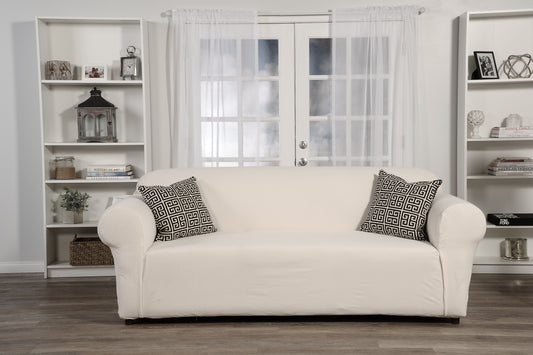
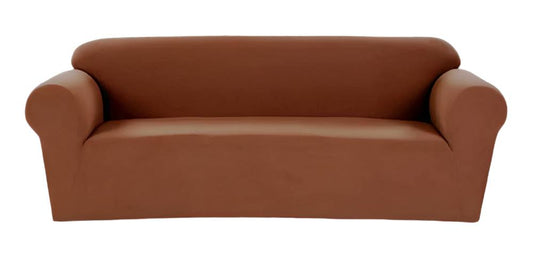
Slipcovers made with elastane or spandex content conform closely to the shape of your sofa rather than draping loosely over it. That tension keeps everything taut and reduces the excess fabric that tends to bunch and migrate on slippery surfaces. Our Stretch Fit Sofa Covers are designed with exactly this in mind, offering a secure, tailored fit that works particularly well on leather.
Waterproof protection
Leather and moisture are not a good combination. A spill that soaks through a standard slipcover can leave water stains or accelerate cracking in the leather beneath. A cover with a waterproof membrane adds a genuine layer of protection rather than just a cosmetic one. Browse our Waterproof Furniture Protectors if keeping the leather itself in good condition is a priority.
The right fabric
The material on top of the slipcover affects both the look and the longevity of the product. Cotton duck is a particularly strong choice for leather sofa covers. It is tightly woven, durable, machine washable, and has a natural texture that feels warm and inviting compared to bare leather. Explore our Cotton Duck Slipcovers for options that bring together durability and a classic, relaxed aesthetic.
How to Keep a Slipcover on a Leather Sofa
Choosing the right product is step one. Installing it correctly is step two, and it matters just as much.
Start by measuring your sofa carefully before you buy. An oversized cover has more excess fabric, which means more opportunity to shift and bunch. Getting the size right from the start reduces how much work you have to do to keep things looking neat day to day. Most sizing guides ask for the overall width, the seat depth, and the height from the floor to the top of the back. Taking a few minutes to get accurate numbers before ordering makes a real difference in how the cover fits and performs.
Once you have your cover, fit it by tucking the excess fabric deep into the seat crevices using a ruler or a flat spatula. Shallow tucks come undone quickly, especially on leather where there is no texture to hold the fabric in place. Push it in as far as it will go, working evenly across the full length of the sofa rather than just the center.
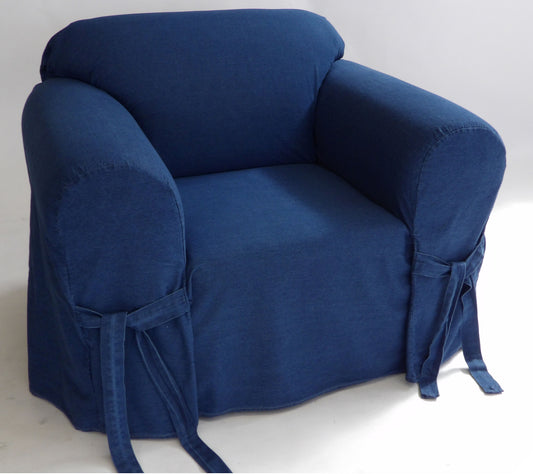
Foam anchor rolls are worth picking up if you find the fabric still works its way loose. These inexpensive inserts are pushed into the crevices alongside the tucked fabric and physically prevent it from pulling back out. Some covers also come with elastic straps or ties that wrap under the sofa frame, which anchor the cover from below and reduce upward movement when people sit and stand.
Finally, a quick smoothing and readjustment after heavy use keeps the cover looking clean and intentional. It takes less than a minute and makes a noticeable cumulative difference over time.
Slipcover vs. Reupholstering: Which Makes More Sense?
This question comes up often, and the honest answer depends on what you are working with. If your leather sofa is structurally sound but cosmetically tired, scratched, or simply not the look you want anymore, a slipcover is almost always the smarter move. It costs a fraction of what reupholstering runs, it can be installed the same day, and it is completely reversible. If your taste changes or the slipcover eventually wears out, you replace it without a second thought.
Reupholstering typically costs between $1,000 and $4,000 or more depending on the size of the sofa, the fabric selected, and local labor rates. The sofa is usually out of your home for several weeks during the process. And once it is done, you are committed to that fabric and that look for the long haul.
Where reupholstering makes more sense is when there are underlying structural issues, broken springs, or damage beneath the surface that a slipcover cannot fix. A cover handles the cosmetic layer beautifully, but it cannot address what is going on underneath the upholstery. If the frame and cushions are in solid shape, save the money and go with a slipcover. The results are comparable visually, and the financial difference is significant.
A Note on Leather Care Under Your Cover
One detail worth keeping in mind when covering leather long term is breathability. Leather benefits from occasional airflow to stay properly conditioned and avoid drying out or cracking over time. Most fabric slipcovers are breathable enough that daily use is not a concern, but if you plan to leave the cover on indefinitely, it is a good habit to remove it every few months, wipe down the leather surface, and apply a quality conditioner before putting the cover back. This keeps the leather supple and in good shape even when it is not visible, and it extends the overall life of the sofa considerably. Treating it as part of your regular home maintenance routine means your leather will still be in great condition long after the slipcover itself has been swapped out.
Find Your Fit at The Slipcover Company

We built our product range around what actually works in real homes, which means every cover we carry is selected for how it performs in practice, not just how it looks in a product shot. If you have a leather sofa and you are tired of covers that slide, bunch, and look sloppy by the end of the day, we have options built to solve exactly that problem. The right slipcover makes all the difference in the world.
Browse our full collection and find slipcovers for leather sofas that stay secure, look great, protect your furniture the way a good cover should, and give you one less thing to worry about at home.
Frequently Asked Questions
Can I put a slipcover on a leather couch?
Yes, and it works very well when you choose the right product. The key is selecting a slipcover with grip backing or a stretch fit design, since leather's smooth surface gives standard covers very little to hold onto. With the right cover and proper installation, a slipcover on a leather sofa can look polished, stay put through daily use, and hold up without constant readjusting.
What is the best way to cover a leather sofa?
A stretch fit slipcover with grip backing is the most effective combination for leather. The stretch fabric wraps tightly around the sofa's shape while the rubberized backing creates friction against the smooth surface. Pair that with deep tucking in the seat crevices and foam anchor rolls where needed, and you have a setup that holds through regular use. Adding a waterproof layer provides extra protection if spills are a regular concern in your household.
Can you put a fabric cover over a leather couch?
Absolutely. Many people prefer the feel of fabric over leather, particularly in family rooms where warmth and comfort are the priority. Fabric is softer, breathes better seasonally, and does not carry the cold-in-winter, sticky-in-summer qualities that leather can have. Cotton duck is one of the best fabric choices for this because it is durable, easy to wash, and has a natural texture that suits most home styles beautifully.
Is it worth it to reupholster a leather sofa?
For most people with a structurally sound sofa, a slipcover is the better choice. Reupholstering is expensive, time-consuming, and permanent. A quality slipcover solves the same cosmetic problem at a much lower cost and gives you the flexibility to change the look again down the road without any additional commitment. Reupholstering makes more sense when there are structural or cushion issues that need to be addressed at the source, not just covered over.